
Styrene-Butadiene Rubber is a type of synthetic rubber created through the copolymerization of styrene and butadiene. This blend merges the advantages of both monomers, resulting in a material known for its strong resistance to wear and tear, excellent flexibility, and solid aging stability. SBR is widely utilized in the production of tires, shoe soles, conveyor systems, seals, and a variety of molded rubber products. Valued for its reliable mechanical strength and economical production costs, SBR remains a go-to material in industries that demand toughness and longevity.

Month: June 2026
-
Carbon Black
Carbon black is a critical reinforcing agent used in the rubber and plastic industries. It enhances strength, wear resistance, and durability across a variety of applications. The rubber industry primarily uses two types of carbon black, each offering distinct performance characteristics.
⸻
Types of Carbon Black
Hard Carbon Black (N100–N300 Series)
Known for its high abrasion resistance, hard carbon black is commonly used in the production of vehicle tire treads. It imparts stiffness, toughness, and low resilience to rubber compounds, making it ideal for high-wear applications.
Soft Carbon Black (N500–N700 Series)
Designed for flexibility, soft carbon black is used in components such as tire carcasses, where significant flexing occurs. It provides a softer, more elastic, and resilient rubber compound while maintaining strength and durability.
Note: The production processes of hard and soft carbon black differ significantly, resulting in distinct physical and reinforcing properties.
⸻
Applications
• Tires (treads and carcasses)
• Rubber and plastic components
• Pigments in printing inks and coatings
• UV protection and conductivity in coatings
• Reinforcing agent in rubber isolation and footwear
⸻
Industries of Use
• Automotive
• Footwear
• Construction (rubber isolation)
• Paint and coatings
• Printing and packaging
-

Slack Wax
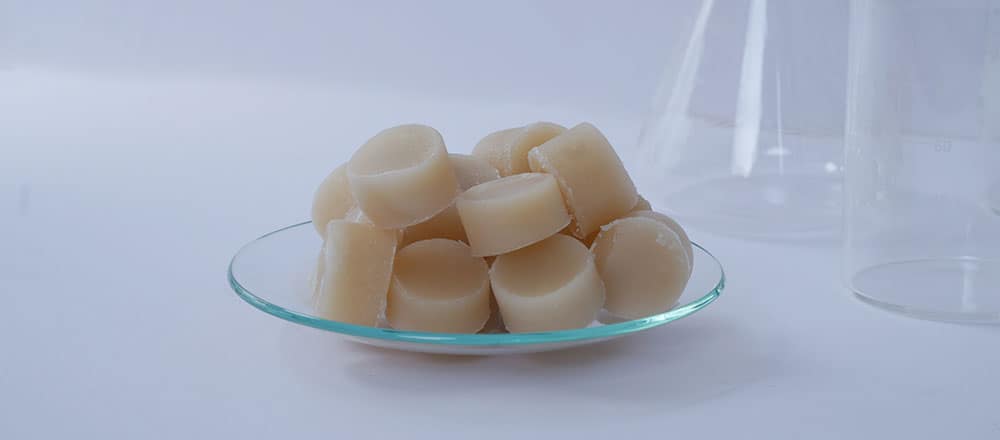
Slack wax is a by-product of lubricating oil refining, derived during the vacuum distillation process where paraffin and microcrystalline waxes are separated from base oils. Composed primarily of oil and wax, it serves as a raw material for the production of paraffin wax and is valued for its versatility across industries.
Appearance & Classification
Typically yellow to brown in color, slack wax is categorized by its melting point:
• Light Grade: 50–52°C
• Heavy Grade: 53–55°C
It contains between 5% and 30% oil, with higher oil content generally resulting in a lower market price.
Applications
• Candle manufacturing
• Wax emulsions
• Textile finishing
• Insulation and glass wool production
• Paraffin wax production
Slack wax with 10%–30% oil content is particularly suitable for use in colder regions such as Turkey, Russia, and Ukraine.
Key Advantages
• High melting point
• Light color
• Cost-effective precursor to paraffin wax
Packaging Options
• Reconditioned drums
• Oversized bags
• Flexitanks
Storage Guidelines
Store indoors whenever possible. If outdoor storage is necessary, keep covered and shielded from direct sunlight, rain, and snow to preserve product integrity.
Safety & Handling
Stable under normal conditions. Not expected to cause irritation to skin or eyes with standard handling.
Industries of Use
• Textiles
• Insulation
• Candle production
-
Paraffin Wax
Paraffin wax is a refined oil by-product, primarily obtained from gas oil or kerosene during the distillation process in oil refineries. Known for its versatility and stable properties, it is widely used across various industries.
⸻
Applications
• Candle production
• Paint formulations
• Waterproof coatings
• Thermal and electrical insulation
• Paper coating and finishing
• Adhesives manufacturing
• Cosmetic products
• Hygiene and personal care items
⸻
Grades of Paraffin Wax
• High-Quality Paraffin Wax:
Features low oil content, no moisture, odorless composition, and excellent structural integrity.
• Medium-Quality Paraffin Wax:
Contains a slightly higher oil content and is suitable for general-purpose applications.
Key Characteristics
• Low oil content
• High melting point
• Pale color
• Low penetration rate
• Strong and non-brittle structure
⸻
Packaging Options
• Slab in carton
• Slab in polypropylene (P.P)
• New steel drums
⸻
Storage Guidelines
For optimal shelf life, store indoors. If outdoor storage is necessary, ensure the product is covered and protected from direct sunlight, rain, and moisture.
Safety & Handling
Stable under normal storage conditions. Paraffin wax is not expected to irritate the skin or eyes during typical handling procedures.
⸻
Industries of Use
• Textile
• Insulation
• Candle manufacturing
• Paints and coatings
• Paper and packaging
• Adhesives
• Cosmetics and hygiene products
-
Bitumen
Bitumen is a heavy, sticky substance that ranges from a thick liquid to a semi-solid form. Typically dark brown or black, it’s composed mainly of asphaltenes, resins, and various petroleum-based compounds. Its exact makeup can vary, leading to different characteristics and performance capabilities.
The primary use of bitumen—accounting for approximately 70% of global consumption—is in road construction. There, it acts as a binder, holding together aggregates to create asphalt pavement. Beyond roads, it also plays a crucial role in waterproofing systems, such as roofing membranes and protective coatings for flat roofs.
⸻
A Look Into Asphalt Types and Their Functions
Asphalt comes in many forms, each shaped by the source and processing of crude oil. To classify them, refineries rely on standardized testing methods that assess properties like viscosity, penetration resistance, and overall performance. These tests help divide asphalt into categories—primarily penetration grades and viscosity grades—each tailored for specific uses.
Additionally, there are specialized forms like oxidized, diluted, and emulsified asphalt, classified according to how they’re produced.
Gilsonite: A Natural Form of Asphalt
Gilsonite, or natural asphalt, is known for its hard, brittle texture and shiny appearance. It’s categorized by how much ash it contains and how well it dissolves in solvents. While it’s often ground into powder for easier use, its chemical composition is quite similar to refined asphalt. When blended with conventional bitumen, Gilsonite enhances water resistance, although its limited penetration and tendency to deform can restrict its applications.
Common Uses of Gilsonite:
• Printing inks
• Protective coatings
• Oil and gas drilling additives
• Asphalt mix enhancement
• Foundry binders
• Industrial chemicals
• Road and highway materials
Penetration Grade Bitumen
This type of bitumen is most commonly used in paving. It’s categorized based on how deeply a standard needle can penetrate the bitumen at set conditions, a test that helps determine its hardness. Softer grades, which allow deeper penetration, are better suited for cold environments. Grades such as 60/70 and 80/100 are the most widely used, particularly in construction and waterproofing. Choosing the right grade depends on both climate and expected traffic conditions.
Viscosity Grade Bitumen
Viscosity-grade (VG) bitumen is classified based on how thick (viscous) it is at high temperatures. This system offers a more precise and modern alternative to the traditional penetration test. Widely adopted in countries like India, VG bitumen is available in four main grades: VG 10, VG 20, VG 30, and VG 40—each designed for different climate and usage needs.
Why Choose VG Bitumen?
• It delivers consistent performance at elevated temperatures.
• It helps reduce the risk of failure during hot weather.
• VG grades are tested across multiple temperatures (25°C, 60°C, and 135°C), providing a clearer picture of performance under real-world conditions.
Bitumen Emulsion
Bitumen emulsions are made by dispersing bitumen in water using an emulsifying agent. This process eliminates the need for harmful solvents, making it an eco-friendlier option compared to cutback bitumen. These emulsions are ideal for quick road repairs and maintenance, especially where heating is impractical. They’re commonly used for:
• Tack coats
• Chip seals
• Slurry seals
• Micro-surfacing
Cutback Bitumen
Cutback bitumen is used when low-viscosity bitumen is required, or when heating standard bitumen isn’t feasible. It’s made by blending penetration-grade bitumen with petroleum solvents like kerosene or diesel. After application, these solvents evaporate, leaving behind a layer of bitumen. While it’s useful in cold climates, cutback bitumen is increasingly discouraged due to its environmental impact—the solvents it contains are harmful to both health and the ecosystem.
Oxidized Bitumen
This modified bitumen is created by blowing air through hot penetration-grade bitumen. The result is a material with increased chemical stability, better resistance to water, and higher softening points, making it suitable for demanding applications. It’s commonly used in:
• Industrial insulation
• Dam and building waterproofing
• Road construction (combined with other bitumen types)
• Pipe coating, especially in oil and gas industries
-
Recycled Base Oil
Used oils — including motor oil, hydraulic fluids, and gear oils from vehicles and machinery — can be effectively re-refined and repurposed as valuable feedstock for various petroleum-based industries. Contrary to common belief, motor oil doesn’t wear out — it simply becomes contaminated, making it ideal for recycling.
⸻
Environmental & Economic Advantages
Recycling used oil offers both environmental protection and resource efficiency:
• Reduces environmental pollution: One gallon of used motor oil can contaminate up to one million gallons of water if improperly disposed of.
• Conserves resources: Unlike virgin base oil production, which requires 100 gallons of crude oil to yield just one gallon of base oil, only 1.4 gallons of used oil is needed to produce the same amount through re-refining.
Addresses feedstock scarcity: Growing demand and limited crude-based resources are increasing the reliance on re-refined oils for sustainable supply.
⸻
Desirable Characteristics of Re-refined Base Oil
• Excellent thermal and oxidative stability
• Uniform viscosity and operational consistency
• Low volatility and high flash point
• Low Total Acid Number (TAN)
• Low sulfur content
• Light color and suitable Viscosity Index (VI)
⸻
Packaging Options
• Steel drums
• Flexitanks
-

Base Oil
Base oil is a fundamental component in the formulation of lubricants, including motor oils, greases, and metalworking fluids. Extracted through the refining of crude oil, base oils are tailored for specific performance characteristics, with viscosity across varying temperatures being a key factor.
Production Process
Base oils are produced by heating crude oil in a distillation tower to separate light and heavy hydrocarbons. Light fractions are converted into fuels like gasoline and diesel, while heavier fractions are used to produce bitumen and base oils.
The most commonly used crude for base oil production is paraffinic, though naphthenic crude is also used for applications requiring improved solubility and low-temperature properties.
Advanced refining techniques such as hydrogenation are employed to remove impurities like sulfur and aromatics, yielding highly pure base oils suitable for demanding applications.
Applications
• Motor oils
• Lubricating greases
• Metalworking fluids
• Hydraulic oils
• Industrial lubricants
Types of Base Oil
1. Mineral Base Oil
Derived directly from refined crude oil. Only 1–2% of a crude barrel becomes base oil; the rest is refined into fuels and other products.
2. Synthetic Base Oil
Produced via chemical synthesis, synthetic base oils offer excellent thermal stability and uniform molecular structures. Common types include:
• Paraffinic synthetic oils
• Naphthenic synthetic oils
• Polyalphaolefins (PAOs) — used in Group IV base oils
• Esters, PAGs, and biolubes — categorized under Group V
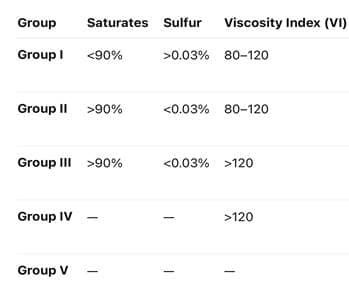
API Base Oil Groups
Base oils are categorized into five groups by the American Petroleum Institute (API):

Grades of Base Oil
Base oils are also identified by Solvent Neutral (SN) grades, based on viscosity at 40°C:
• SN 150
• SN 300
• SN 500
• SN 650
Lower SN grades are lighter in color and viscosity; higher grades tend to be darker and more viscous.
Desirable Characteristics
• Excellent thermal and oxidative stability
• Stable viscosity across temperature ranges
• Low volatility
• High flash point
• Light color and low sulfur content
• Low Total Acid Number (TAN)
• Strong operational consistency
Packaging Options
• Steel drum
• Flexitank
• IBC (Intermediate Bulk Container) tanks
Storage Guidelines
• Ideal storage: Indoors, at consistent temperatures (~25°C)
• Outdoor storage: Must be covered and shielded from sunlight, rain, and snow
• Container compatibility: Safe in mild steel tanks
Safety, Health & Environmental Notes
• Stable under standard conditions
• Non-corrosive and minimally irritating
• Avoid prolonged or repeated contact with used oil
• Handle with care and follow local environmental guidelines
-
Rubber Processing Oil (RPO)
Rubber Processing Oil (RPO) is a petroleum-derived product widely used in the manufacturing of various rubber-based goods. It enhances processing efficiency, improves the physical properties of rubber compounds, and serves as a cost-effective plasticizer and filler.Rubber Processing Oil (RPO) is a petroleum-derived product widely used in the manufacturing of various rubber-based goods. It enhances processing efficiency, improves the physical properties of rubber compounds, and serves as a cost-effective plasticizer and filler.
Applications
RPO is essential in industries such as:
• Tire manufacturing
• Hose and conveyor belt production
• Sponge rubber and latex products
• Paints and coatings
• Rubber tiles and molded articles
• Footwear and rubber adhesivesTypes of RPO
Aromatic RPO
Characterized by a double-bonded ring carbon structure, aromatic RPO is dark in color and offers excellent solubility, thermal stability, and color retention, making it ideal for tires, tread rubber, and molded sheets.
Paraffinic RPO
Known for its increasing viscosity with chain length, paraffinic RPO is commonly used in butyl rubber applications.
Naphthenic RPO
Also known as cycloparaffins, this type features excellent solubility, color stability, and thermal resistance — suitable for LPG tubes, slippers, floor tiles, and molded items.Grades
• Light Grade (Viscosity: 20–30): Ideal for colder climates and seasons.
• Heavy Grade (Viscosity: 30–50): Preferred in warmer regions due to higher thermal tolerance.
Key Benefits• Enhances tensile strength of rubber compounds
• Improves vulcanization performance
• Reduces formulation costs
• Acts as an effective plasticizer and filler
Packaging Options• Flexi tanks
• Reconditioned drums
Storage GuidelinesStore indoors for optimal shelf life. If outdoor storage is necessary, keep it under cover and protect it from direct sunlight, rain, and snow.
Safety and Handling
Avoid direct skin contact. In case of exposure, wash thoroughly with soap and water. Follow standard health, safety, and environmental protocols during handling and storage.
-

Safety First: How We’re Prioritizing Worker Safety and Environmental Protection
Donec vel pellentesque nisl, molestie tempus ligula. Cras massa turpis, pretium nec placerat ornare, sodales ac urna. Sed commodo semper fermentum. Phasellus bibendum lorem nisi, et efficitur sapien dapibus sed. Suspendisse iaculis erat ut enim tincidunt, vitae bibendum lorem mattis. Quisque sed nunc quis nisi aliquam dictum at ac velit. Suspendisse orci nunc, condimentum sit amet lobortis et, maximus ac eros. Curabitur sit amet purus eget leo hendrerit rhoncus a sit amet massa. Aliquam sed posuere ex. Sed maximus sapien ac tortor consequat, non malesuada urna commodo. Orci varius natoque penatibus et magnis dis parturient montes, nascetur ridiculus mus. Integer pharetra scelerisque luctus. Integer sed aliquam est.
-
The Growing Demand for Energy: How We’re Meeting the Needs of Our Customers
Suspendisse id libero pellentesque, condimentum dui sed, vestibulum turpis. Pellentesque eu tortor ut orci rhoncus vestibulum. Vestibulum placerat porta sem eu viverra. Nulla interdum nibh sit amet convallis laoreet. Integer sit amet dolor ac lectus semper mollis. Proin et porttitor velit. Mauris commodo nunc neque. Sed hendrerit consectetur lectus ac feugiat. Nullam et cursus quam. Donec a erat urna. Pellentesque quis venenatis massa. Quisque tristique nibh nec facilisis ullamcorper. Nam ut auctor ante.




Archive
Categories
Recent Posts
- Woodside agrees to sell Greater Sunrise stake to TIMOR GAP for up to $200 million
- SNOC completes first phase of UAE gas field development at Hadiba
- Percepto launches Axion AI inspection platform for drone and sensor data
- ASCO invests $24.4 million in AI and automation for offshore logistics
- TotalEnergies completes $800 million sale of Renaissance JV oil interest in Nigeria to Vaaris
Tags
Adhesives Agricultural Automotive Candle Community engagement Construction Cosmetics Electrical and Electronics Footwear Gas production Household and Toy Hygene Industry trends Isolation Medical Healthcare Mining News Oil Oil exploration Packaging Paint Paper Petrochemicals Pipes Rubber Safety culture Textile Workforce